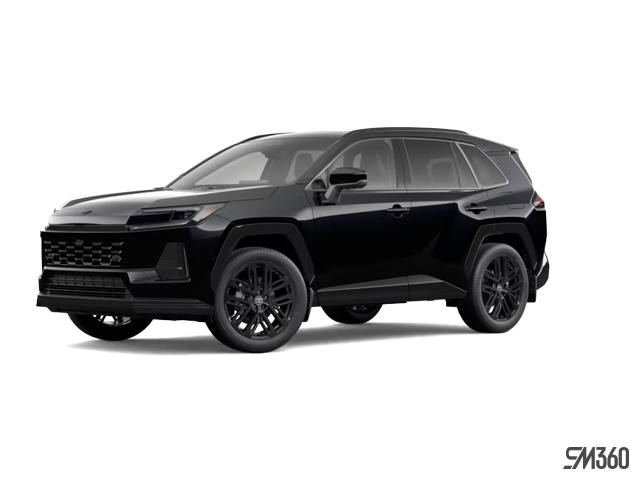
Photo for illustrative purposes only.
Find out more
| Monday | 9:00AM / 8:00PM |
| Tuesday | 9:00AM / 8:00PM |
| Wednesday | 9:00AM / 8:00PM |
| Thursday | 9:00AM / 8:00PM |
| Friday | 9:00AM / 6:00PM |
| Saturday | 10:00AM / 4:00PM |
| Sunday | Closed |
| Monday | 6:45AM / 5:00PM |
| Tuesday | 6:45AM / 5:00PM |
| Wednesday | 6:45AM / 5:00PM |
| Thursday | 6:45AM / 5:00PM |
| Friday | 6:45AM / 1:30PM |
| Saturday | Closed |
| Sunday | Closed |
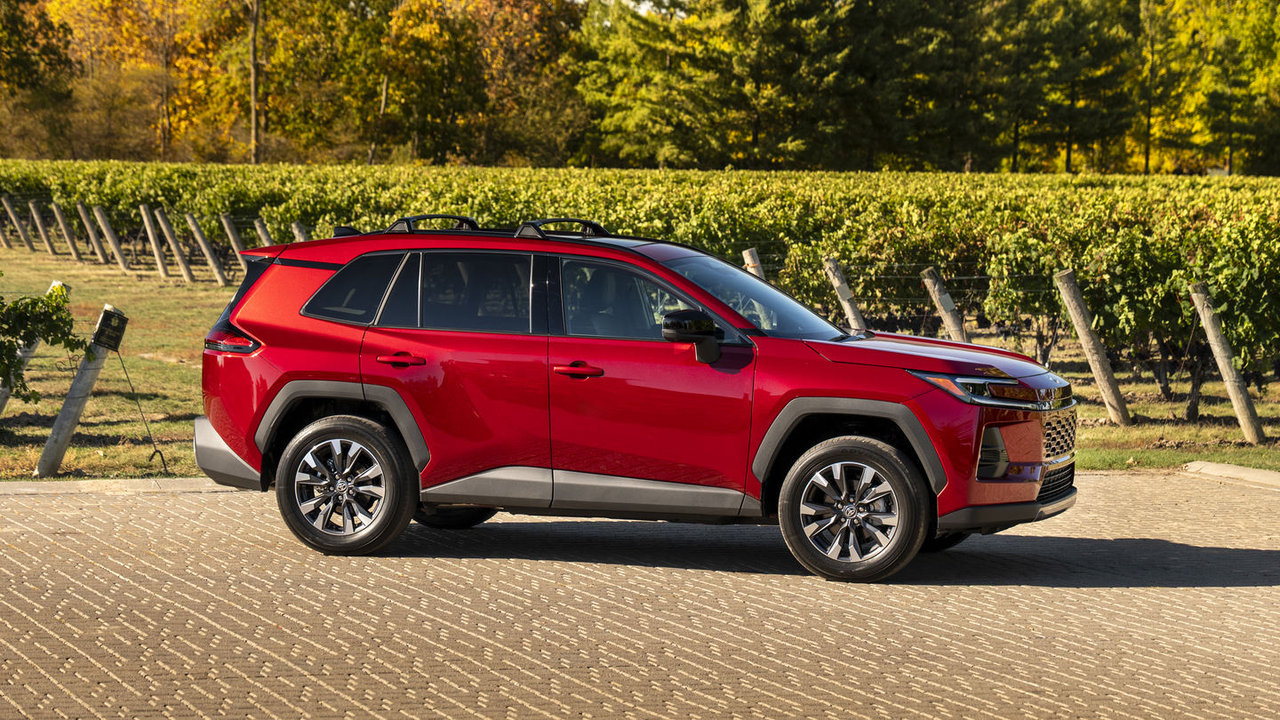
When vehicle shopping, buyers routinely focus on the cargo volume listed on the spec sheet. The higher the number, the more practical the space appears. In practice, two vehicles with nearly identical cargo ratings can handle a stroller, a bicycle, or a hockey bag completely differently.
Cargo area shape, opening width, liftover height, and seat-folding mechanisms matter just as much as raw volume in liters. Here is how to evaluate the cargo figures of several popular Toyota models—and why a real-world test at the dealership remains the best way to choose.
The following table compiles cargo capacities published by Toyota Canada in the 2026 specifications for five models, measured behind the rearmost occupied row of seats:
| Model | Body Style | Cargo Volume Behind Rearmost Row |
| Corolla Hybrid | Sedan | 371 L |
| Prius Phev | Hatchback | 575 L |
| Corolla Cross Hybrid | Compact SUV | 609 L |
| Grand Highlander | 3-Row SUV | 586 L |
| Sienna | Minivan | 949 L |
These figures provide a useful starting point, but they do not tell the whole story. For instance, while the Prius Phev boasts more total liters than the Corolla sedan, its sloping rear roofline restricts the height of bulky cargo. Conversely, the Corolla’s traditional trunk provides a deep, fully enclosed, and concealed compartment. Furthermore, cargo volume measurement methods can differ between vehicle classes, making straight numerical comparisons misleading.
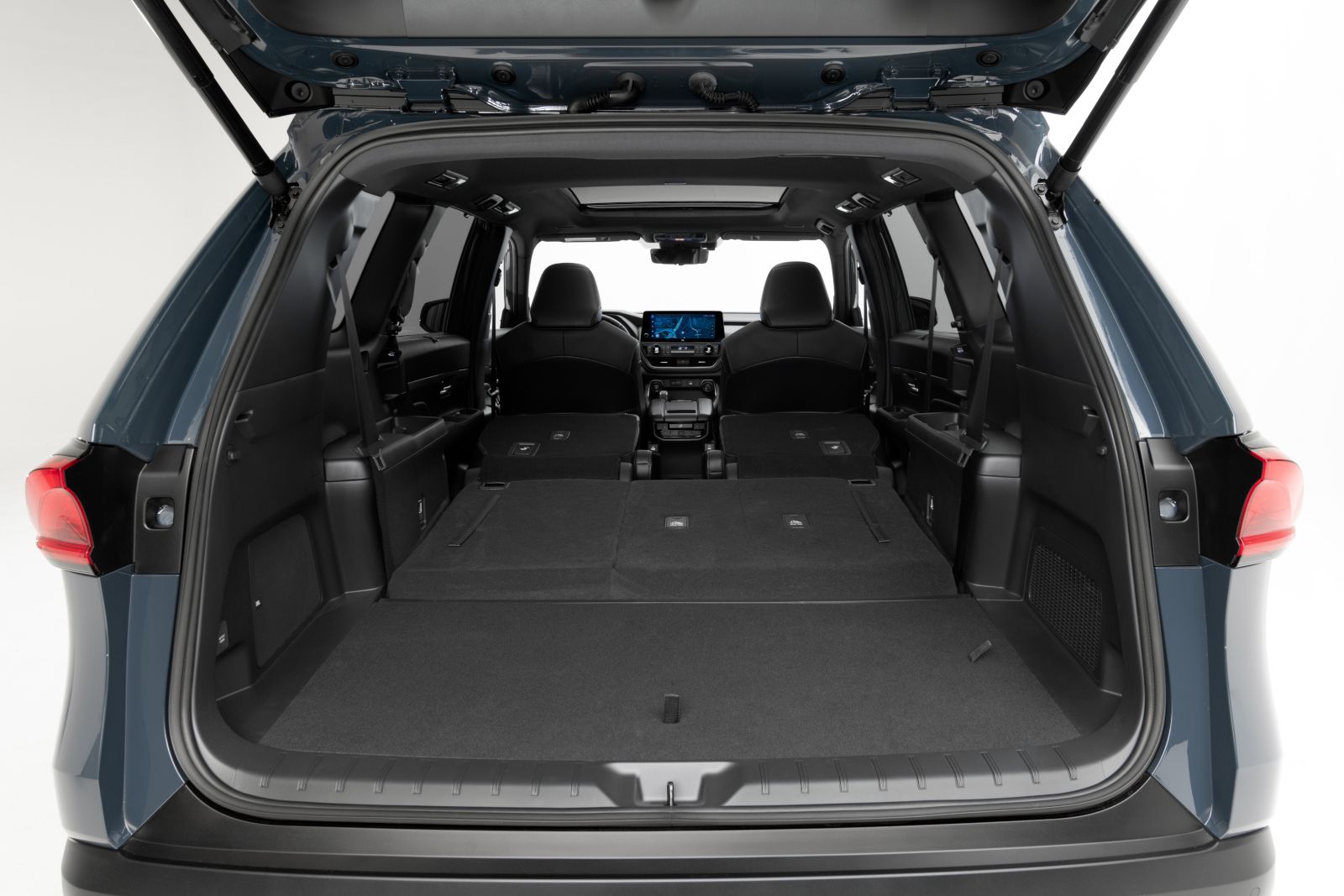
Three-row vehicles offer significantly more modular space. The Grand Highlander expands from 586 L behind the third row to 1,640 L behind the second row, reaching 2,761 L with all rear rows folded flat. The Sienna provides 949 L behind the third row, growing to 2,129 L, and up to 2,860 L of total capacity.

Total volume means little if an item cannot clear the hatch or trunk opening. A sedan like the Corolla features a narrower trunk aperture than a hatchback or SUV. For a folded stroller or tall moving boxes, a rear hatch like that on the Prius or Corolla Cross provides significantly more loading versatility.
Liftover height also matters, especially when hoisting a heavy golf bag, a case of bottled water, or a wheelchair. A compact SUV requires lifting cargo slightly higher off the ground than a sedan. However, pulling heavy items back out of a deep sedan trunk can place more strain on your back. The ideal setup depends entirely on what you load regularly.
A minivan like the Sienna also allows you to load gear directly through wide dual sliding side doors. On the Corolla Cross, Toyota offers an available power liftgate with adjustable height programming—a welcome feature inside low-clearance home garages.
Wheel well intrusions, rear seatback angles, and rear window rake eat into usable space. An adult bicycle, for example, slides much more readily into a wide, boxy cargo hold than into a long, narrow one. That makes the seat-folding configuration critical.
The Corolla Cross features standard 60/40 split-folding rear seats. On the Grand Highlander, the XLE trim includes a 60/40 bench in the second row, whereas upper trims use captain’s chairs, altering how you accommodate long items down the middle. In any three-row SUV, it is also worth testing how smoothly the third-row mechanism folds flat before packing up for a family vacation.
The surest way to confirm whether your gear fits is to test it in person. When visiting the dealership, bring along your stroller, hockey bag, or golf clubs. Fold the stroller and place it in the cargo hold, then drop the rear seats to check if a bicycle or oversized box fits without hassle.
Key checkpoints during your visit:
Hatch opening width and bumper liftover height
A flat load floor once the rear seats are folded
Ergonomics and ease of operation for seat-folding latches
Remaining passenger space once your typical gear is loaded
Taking five minutes to run this hands-on check avoids frustrating post-purchase surprises. It is especially valuable for families packing a full vehicle for road trips or parents hauling hockey gear across town multiple nights a week.
Cargo space gets used every day, not just on summer road trips. Weekly groceries, school gear, kids' sports bags, and big-box store runs around Laval require fast, straightforward access. An easy-opening liftgate, a manageable cargo floor height, and quick-folding seats save time every single day.
At Vimont Toyota Laval, our team can show you the Corolla, Corolla Cross, Grand Highlander, and Sienna side by side (subject to inventory) so you can evaluate real-world cargo capacity firsthand. Schedule an appointment, bring the gear you transport most often, and ensure your next vehicle fits your daily routine.
Photo for illustrative purposes only.
Find out more
Five Checks to Perform on Your Toyota Before Winter Sets In
In Quebec, winter weather arrives without warning. A single sub-zero overnight freeze is often all it takes to expose a weak battery, worn wiper...
Read more
Plug-in Hybrid Vehicles: Are They Truly Cost-Effective If You Don’t Charge Every Day?
Plug-in hybrid vehicles (PHEVs) are attracting more and more Quebec drivers. The prospect of completing most daily commutes on electric power...
Read more
Toyota Corolla: 60 Years of Evolution, the Same Winning Formula
Few vehicles have spanned the decades quite like the Corolla. Introduced in Japan in 1966, Toyota’s compact car celebrates its 60th anniversary in...
Read morePowered and developed by
