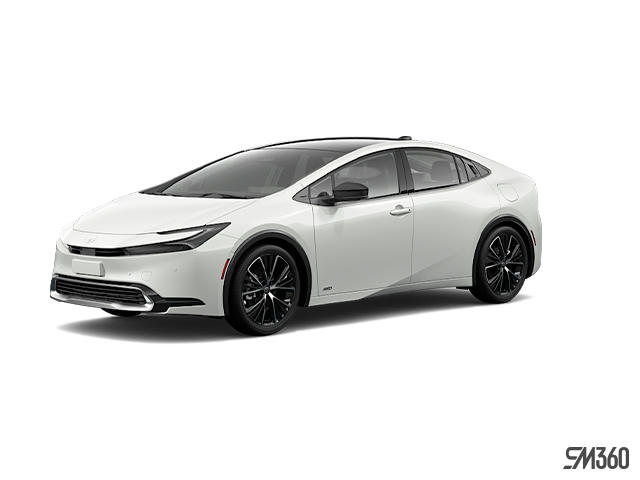
Photo for illustrative purposes only.
Find out more
| Monday | 9:00AM / 8:00PM |
| Tuesday | 9:00AM / 8:00PM |
| Wednesday | 9:00AM / 8:00PM |
| Thursday | 9:00AM / 8:00PM |
| Friday | 9:00AM / 6:00PM |
| Saturday | 10:00AM / 4:00PM |
| Sunday | Closed |
| Monday | 6:45AM / 5:00PM |
| Tuesday | 6:45AM / 5:00PM |
| Wednesday | 6:45AM / 5:00PM |
| Thursday | 6:45AM / 5:00PM |
| Friday | 6:45AM / 1:30PM |
| Saturday | Closed |
| Sunday | Closed |
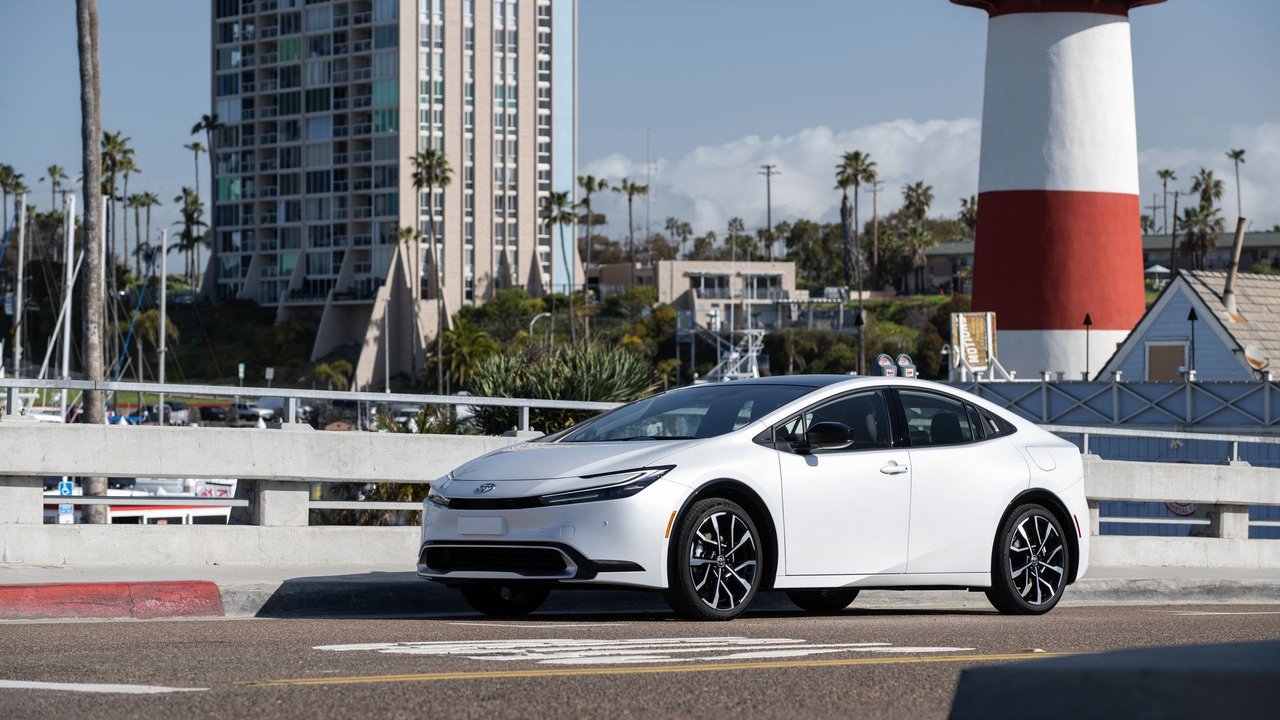
Plug-in hybrid vehicles (PHEVs) are attracting more and more Quebec drivers. The prospect of completing most daily commutes on electric power without range anxiety on longer trips is undeniably appealing. Yet one question comes up often: does this type of vehicle still make financial sense if you don't plug it in every night?
The 2027 Toyota Prius Prime (Plug-in Hybrid) serves as a great case study. Its cost-effectiveness depends primarily on your routine: daily mileage, home charging access, frequency of long-distance trips, and electricity rates. Here is how to evaluate each factor.
A conventional hybrid, such as the Prius AWD, charges its compact battery automatically via the gas engine and regenerative braking. You never plug it in. The electric powertrain primarily assists the engine to reduce fuel consumption, especially in city driving. The 2027 Prius delivers 196 horsepower with an estimated combined fuel consumption of 4.8 L/100 km.
A plug-in hybrid features a substantially larger battery pack that charges from an electrical wall outlet or a dedicated charging station. In the Prius Prime, a 13.6-kWh battery provides up to 72 km of all-electric range on the SE trim and up to 64 km on the XSE grade. Once that electric charge is depleted, the vehicle operates like a standard hybrid, while total system output climbs to 220 horsepower.

A plug-in hybrid delivers maximum return when the bulk of your everyday driving stays within its all-electric range. A commuter traveling 50 km round-trip between Laval and Montreal who plugs in overnight can cover nearly their entire workweek without using a drop of gasoline—at least in mild weather. In winter, all-electric range decreases due to cabin heating demands and cold temperatures impacting battery chemistry.
The operating cost calculation is straightforward. Under Hydro-Québec's residential Rate D initial tier, electricity costs roughly 7 cents per kWh. A full charge of the 13.6-kWh battery costs around one dollar before accounting for charging efficiency losses. By comparison, covering that same 72 km in hybrid mode at 4.5 L/100 km in the SE trim consumes roughly 3.2 liters of gasoline—costing over five dollars assuming a fuel price of $1.60/L (used as an example).
Plugging in daily yields savings of approximately four dollars for every 72 km driven on electric power. For a driver utilizing the full electric range every workday (around 250 days per year), annual fuel savings reach nearly $1,000, depending on actual fuel prices and driving distances.
This is where the nuance matters. Plugging in two or three nights a week still allows you to complete a significant portion of your weekly driving on electricity. Your total savings will be lower, but they do not disappear. Under the same calculation, three full charges per week equate to roughly $600 in annual fuel savings.
If you rarely plug it in, the Prius Prime behaves just like a regular hybrid. Fuel economy remains low—rated by Toyota at 4.5 L/100 km for the SE trim and 4.9 L/100 km for the XSE—numbers very close to the standard Prius hybrid. However, the primary financial advantage of buying a plug-in model remains unexploited.
Your driving profile also plays a role. Families frequently heading to the cottage or taking highway trips into regional areas spend more time running in hybrid mode. In those scenarios, the financial payoff relies almost entirely on weekday urban driving.
How many kilometers do you drive on an average day?
Do you have access to a reliable outlet or charging station at home or work?
How frequently do you take long trips to the cottage or outside the city?
Are you prepared to plug the vehicle in consistently each evening?

Every 2027 Prius Prime comes standard with a dual-voltage Level 1 / Level 2 charging cable. Plugged into a standard 120V household outlet, it charges at Level 1 speeds. Connected to a 240V circuit, it enables Level 2 charging, replenishing the battery in as little as four hours according to Toyota. Level 1 takes longer, but our team can help you determine whether a standard outlet is adequate for your daily commute.
It is worth noting that the Prius Prime retains its standard 40-liter fuel tank. Extended road trips require no mandatory charging stops along the way.
Charging less frequently reduces your fuel savings, which in turn lengthens the payback period needed to offset the higher upfront purchase price of a plug-in hybrid.
The 2027 Prius Prime is available at Vimont Toyota Laval in three trim levels: SE, XSE, and XSE Premium. Our team can run the financial comparisons based on your actual commute, outline the differences between standard hybrid and plug-in hybrid ownership, and walk you through home charging options. Visit us in Laval for a test drive and leave with clear figures to help you choose the right vehicle for your needs.
Photo for illustrative purposes only.
Find out more
Five Checks to Perform on Your Toyota Before Winter Sets In
In Quebec, winter weather arrives without warning. A single sub-zero overnight freeze is often all it takes to expose a weak battery, worn wiper...
Read more
Cargo Volume Doesn’t Tell the Whole Story: Choosing the Right Toyota for Your Lifestyle
When vehicle shopping, buyers routinely focus on the cargo volume listed on the spec sheet. The higher the number, the more practical the space...
Read more
Toyota Corolla: 60 Years of Evolution, the Same Winning Formula
Few vehicles have spanned the decades quite like the Corolla. Introduced in Japan in 1966, Toyota’s compact car celebrates its 60th anniversary in...
Read morePowered and developed by
